If your house is more than 15 or 20 years old, there's a good chance your electrical system is missing safety features that are now standard — GFCI outlets in the kitchen, AFCI protection on bedroom circuits, whole house surge protection, proper grounding. None of these things affect whether your lights turn on, but all of them affect whether your home is protected against shock, fire, and surge damage.
Swamp Rabbit Electric performs electrical safety inspections and code upgrades for homeowners across Greenville, SC and the Upstate. With over 20 years of electrical experience — including 16 years trained under top journeymen in New York City, where code enforcement is as strict as it gets — we know what a safe electrical system looks like and what it takes to bring an older home up to current standards.
An electrical safety inspection is a top-to-bottom evaluation of your home's electrical system. It's not the same as a general home inspection — it's deeper, more detailed, and performed by a licensed electrician who knows what to look for.
During an inspection, we evaluate your main electrical panel for age, condition, capacity, grounding, bonding, and proper labeling. We check your service entrance equipment and visible branch wiring throughout the home. We test GFCI protection in every required location — bathrooms, kitchens, garages, exteriors, laundry areas, and unfinished basements. We verify AFCI protection on the circuits that require it. We inspect outlets and switches for function, proper wiring, and signs of heat damage. We look for evidence of amateur or unpermitted work — double-tapped breakers, improper splices, missing junction box covers, and wire runs that don't meet code.
After the inspection, you get a clear written summary of what we found, categorized by urgency: immediate safety concerns, code deficiencies worth addressing, and maintenance items to monitor over time. No pressure to do everything at once — just an honest picture of where your home stands.
You're buying or selling a home and want an independent electrical evaluation beyond the general home inspection. Your home is 20+ years old and has never had a dedicated electrical inspection. You're planning a renovation and want to know the condition of your existing wiring before adding to it. You've noticed warning signs — flickering lights, warm outlets, buzzing sounds, or breakers that trip regularly. Your insurance company has requested documentation of your electrical system's condition.
Electrical codes are updated on a three-year cycle through the National Electrical Code (NEC). Each update expands safety requirements — more locations require GFCI protection, AFCI requirements cover more circuits, surge protection becomes mandatory on panel replacements. A home that was fully up to code when it was built may have a dozen or more gaps compared to today's standards. We handle the most common and impactful code upgrades for Greenville homeowners:
Ground fault circuit interrupters protect people from electrical shock by shutting off power when they detect current leaking to ground — the kind of fault that happens when an appliance contacts water or a damaged cord touches a wet surface. Current NEC requirements call for GFCI protection in bathrooms, kitchens (all receptacles, not just countertops), garages, outdoors, laundry areas, unfinished basements, crawl spaces, and areas near pools or hot tubs. Many older Greenville homes are missing GFCI protection in half or more of these locations.
Arc fault circuit interrupters detect dangerous electrical arcing — the kind caused by damaged wiring, loose connections, or nails driven through wire behind drywall — and shut the circuit down before a fire starts. Current code requires AFCI protection in bedrooms, living rooms, dining rooms, hallways, closets, kitchens, laundry areas, and most other habitable rooms. If your home was built before the mid-2000s, it likely has no AFCI protection at all. If it was built between 2005 and 2014, coverage is probably limited to bedrooms only.
A surge protective device (SPD) installed at your main panel guards your entire electrical system against voltage spikes from lightning, utility switching, and equipment cycling. Since the 2020 NEC, surge protection has been required on all new and replaced panels. If your home doesn't have one, a single lightning strike or grid surge can damage your HVAC system, appliances, and electronics. We install Type 2 SPDs directly at the panel — a one-time installation that protects everything downstream.
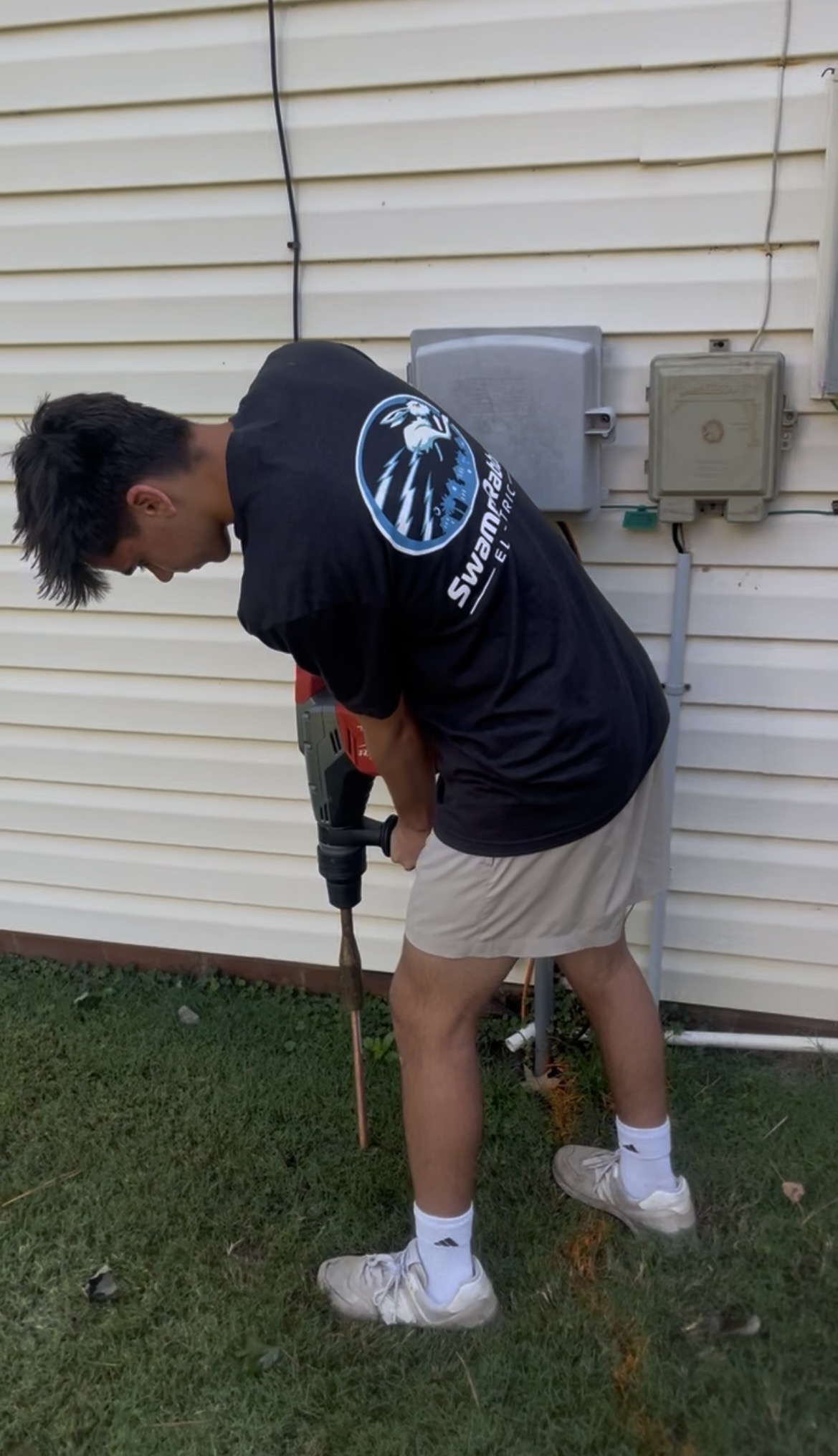
Proper grounding gives electrical faults a safe path to earth, preventing shock and allowing breakers to trip correctly. Older homes in Greenville — especially those built before the 1970s — may have ungrounded outlets (the old two-prong type), missing grounding electrode conductors, or bonding gaps between the panel, water pipes, gas lines, and ground rods. We bring grounding systems up to current standards so your safety devices actually work the way they're designed to.
Current code requires interconnected, hardwired smoke detectors in every bedroom, outside each sleeping area, and on every level of the home. Carbon monoxide detectors are required outside sleeping areas and near fuel-burning appliances. If your home still relies on battery-only detectors or has units that are more than 10 years old, it's time for an upgrade. We install hardwired, interconnected units so that when one detector activates, they all activate.
Homes built in the late 1960s and 1970s sometimes used aluminum branch wiring, which is prone to overheating at connection points and has been linked to an increased risk of electrical fire. If your home has aluminum wiring, we can install approved COPALUM or AlumiConn connectors at every connection point, or rewire specific circuits where the risk is highest.
If your home still has two-prong ungrounded outlets, replacing them with properly grounded three-prong outlets (or adding GFCI protection where grounding isn't feasible) improves both safety and functionality. Many modern appliances and electronics require a grounded outlet to operate safely.
Not every older home needs to be brought fully up to current code overnight. Here's how it works:
If you're not doing new work, existing wiring is generally grandfathered in, but "grandfathered" doesn't mean "safe." A home with no AFCI protection, no GFCI outlets in the bathroom, and no surge protection is legal if nothing's been changed — but it's still exposed to the same fire, shock, and surge risks that modern code is designed to prevent.
If you're adding circuits, replacing a panel, running wiring for a renovation — that new work must meet current code. A panel replacement, for example, now triggers the requirement for whole house surge protection. Adding outlets in a kitchen requires GFCI protection on all of them.
"Since moving to Greenville I have struggled to find a good electrician, until finding Daniel. Daniel has helped me on multiple items- from basement electrical enhancements, closet repairs, and helping with scoping work for future design work. He is transparent, thorough, and his work is top notch.If you’re looking for a consistent electrician that you can rely on, Daniel at Swamp Rabbit Electric is the one."
"Daniel installed a whole house surge protector for me and it really put my mind at ease. He arrived as scheduled, which isn’t always the case with many contractors, and he was very professional. He has also done a few other smaller jobs for me and I’ve been very pleased with all his work."
"Professional, communicative, clean work and great pricing. We had a home surge protector installed. Will be using Daniel for all electrical needs going forward."
We proudly serve homeowners and businesses in:
Whether you're searching for an electrician near you, emergency electrical repair, panel upgrades, EV charger installation, or lighting services in Greenville—you're in the right place.
Our inspections are competitively priced and depend on the size and age of your home. We provide the price upfront before scheduling. The inspection includes a written report of findings and recommendations.
Every three to five years is a good baseline, or sooner if your home is older than 25 years, you've noticed warning signs, or you're planning to sell. If you've recently purchased a home and aren't sure about the electrical history, an inspection gives you a clear starting point.
Not unless you're performing new electrical work that triggers code requirements. Existing wiring is generally grandfathered. However, we often recommend targeted upgrades — GFCI protection in wet areas, AFCI protection on bedroom circuits, and whole house surge protection — because those three items address the most common residential electrical hazards.
A GFCI protects people from electrical shock by detecting current leaking to ground — it's required in wet or damp locations. An AFCI protects property from fire by detecting dangerous arcing in the wiring — it's required in most living spaces. They protect against different hazards, and a fully protected home needs both.
In most cases, yes. GFCI outlets can be installed at individual locations. AFCI breakers can be added to your existing panel if it has compatible breaker slots. Surge protection devices mount directly on or adjacent to your current panel. A full panel replacement is only necessary if the panel itself is outdated, damaged, or out of capacity.
They can. Some insurers offer reduced premiums for homes with updated electrical systems, and some require documentation that your electrical system meets minimum safety standards — especially if you have a panel brand with known safety issues (Federal Pacific, Zinsco). Unpermitted electrical work can also create problems with insurance claims after an incident.
Whether your home is 50 years old or 5, an electrical safety inspection gives you a clear picture of where your system stands and what it needs. Swamp Rabbit Electric performs detailed inspections and handles every level of code upgrade — from adding a few GFCI outlets to full grounding system overhauls.